THE ESSENCE
Bwindi is not merely a national park. It is a cathedral of biodiversity—one of the most extraordinary forests on earth, sanctuary to approximately half the world’s remaining mountain gorillas.
Its name derives from the local Runyakitara: “Mubwindi bwa nyinamura” — “the place of darkness.” This is not hyperbole. Bwindi’s vegetation is so dense, its canopy so complete, that sunlight filters green and fractured to the forest floor.
To trek here is to enter a world that predates human memory. The trees are ancient. The silence is profound. And somewhere, hidden in the thicket, a silverback regards your approach with eyes older than your species.
WILDLIFE
| Species | Population | Sighting Probability |
|---|---|---|
| Mountain Gorilla | ~459 individuals (half world population) | 100% with permit |
| Chimpanzee | ~100 (unhabituated) | Rare |
| L’Hoest’s Monkey | Common | High |
| Black-and-white Colobus | Abundant | High |
| Blue Monkey | Common | High |
| Red-tailed Monkey | Common | High |
| Forest Elephant | ~30 (seasonal) | Very Rare |
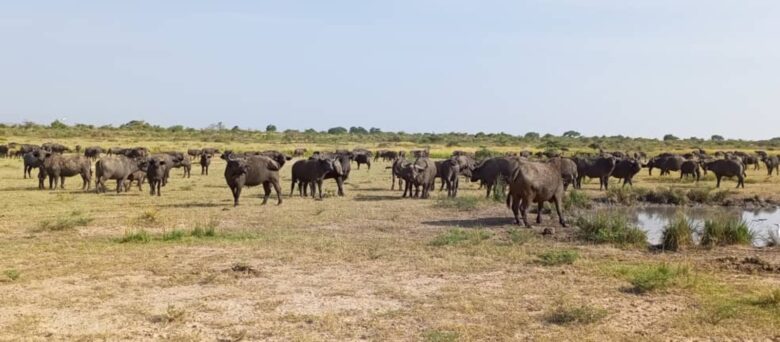
| African Buffalo | ~60 | Occasional |
| Giant Forest Hog | Present | Rare |
| Duiker (multiple species) | Common | Moderate |
Birdlife: Over 350 species, including 23 Albertine Rift endemics. The sought-after African Green Broadbill is present but elusive.
PRIMATE SPECIES: 10
ENDEMIC BIRD SPECIES: 23
TREE SPECIES: 400+
ALTITUDE: 1,160m – 2,607m
THE GORILLA EXPERIENCE
Permit Cost: USD $800 (non-resident)
Booking Horizon: 4-6 months (peak season)
Trek Duration: 1 – 6 hours
Physical Rating: Strenuous
Group Size: Maximum 8 trekkers per family
Time with Gorillas: 1 hour
Porter Recommendation: Strongly advised (USD $15-20, paid locally)
What to Expect:
The trek is physically demanding. Bwindi’s terrain is steep, its vegetation dense, its trails often slick with mist. You will climb, descend, push through nettles, and cross streams.
Your reward: one hour with a habituated gorilla family. You will watch infants tumble through undergrowth. You will observe a silverback’s patient authority. You will kneel seven metres from an animal that shares 98% of your DNA.
This is widely regarded as the most profound wildlife experience on earth.
SECTORS
| Sector | Location | Trek Difficulty | Lodge Concentration | Best For |
|---|---|---|---|---|
| Buhoma | North | Moderate–Strenuous | High | First-time trekkers, varied terrain |
| Ruhija | East | Strenuous | Moderate | Birding, shorter drives from Kabale |
| Rushaga | South | Moderate–Strenuous | High | Large gorilla families, multiple habituated groups |
| Nkuringo | Southwest | Very Strenuous | Low | Dramatic scenery, experienced trekkers |
WHEN TO VISIT
| Season | Months | Conditions | Recommendation |
|---|---|---|---|
| Peak Dry | June–August, December–February | Optimal trekking, trails drier, permits scarce | ★★★★★ |
| Shoulder | March, September–November | Some rain, lush forest, fewer tourists | ★★★★☆ |
| Green | April–May | Heavy rains, challenging trekking | ★★☆☆☆ |
ESSENTIAL INFORMATION
| Detail | Information |
|---|---|
| Established | 1991 (gazetted as National Park) |
| UNESCO Status | World Heritage Site (1994) |
| Area | 331 km² |
| Altitude | 1,160m – 2,607m |
| Annual Rainfall | 1,400 – 1,900mm |
| Temperature | 7°C – 20°C (cool, especially mornings) |
| Nearest Town | Kabale (2-3 hours), Kisoro (2-3 hours) |
| Nearest Airport | Kihihi (Buhoma sector), Kisoro (Nkuringo/Rushaga) |
TIPS
- Book permits early — Peak season permits sell out 4-6 months in advance.
- Hire a porter — USD $15-20 directly supports local employment and provides invaluable physical assistance.
- Train before arrival — Bwindi is steep. Regular hiking in the months before your trek will significantly enhance your experience.
- Request your gorilla family — Specific families can be requested at booking (subject to availability).
- Arrive the day before — Overnight near the park boundary ensures an early, relaxed start to your trekking day.
- Combine with other parks — Bwindi pairs exceptionally with Queen Elizabeth NP (tree-climbing lions, Kazinga Channel) and Lake Bunyonyi (post-trek recovery).
WHY BWINDI MATTERS
Bwindi is not merely a destination. It is a conservation success story.
In 1981, mountain gorilla populations had plummeted to approximately 250 individuals. Poaching, habitat loss, and civil unrest had brought them to the precipice of extinction.
Today, through relentless conservation effort, community engagement, and the economic power of responsible tourism, the population exceeds 1,000.
Your permit fee directly funds:
- Ranger patrols that protect gorillas from poaching
- Veterinary interventions for injured individuals
- Community conservation programmes
- Health clinics and schools in adjacent villages
You do not merely observe conservation. You participate in it.